
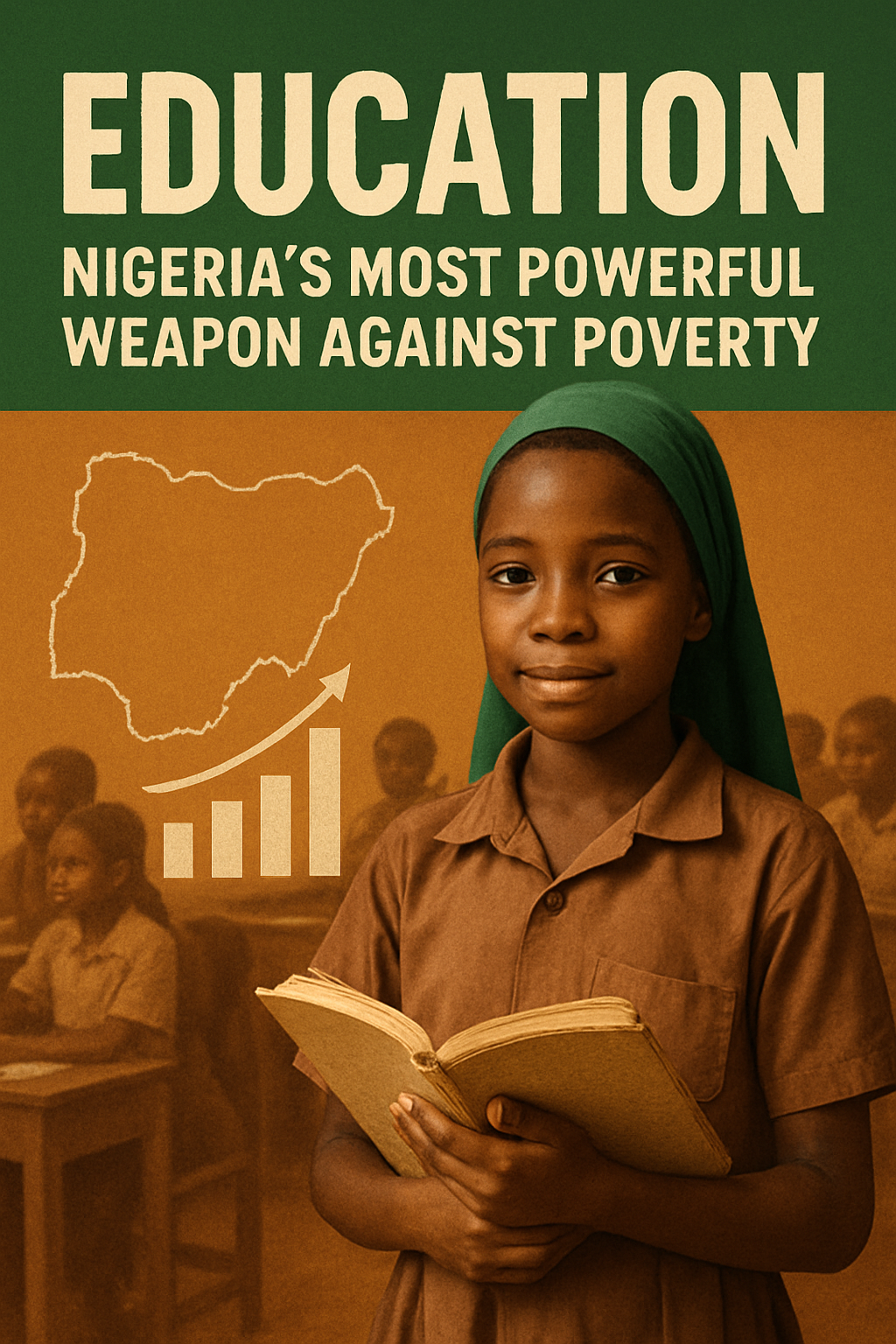
EDUCATION: NIGERIA'S MOST POWERFUL WEAPON AGAINST POVERTY
In the bustling markets of Lagos and the rural villages of Katsina, one solution stands above all others in the fight against poverty: education. With over 87 million Nigerians living in extreme poverty, nearly half the population, the need for action has never been greater. The evidence is clear: every year spent in school increases a child's future earnings by 8-10%, transforms communities, and breaks generational cycles of deprivation.
The link between education and economic opportunity is undeniable. Across Nigeria, young people with secondary education are three times more likely to find formal employment than those without. In Lagos, the Eko Digital initiative has shown what's possible, equipping thousands with tech skills that lead directly to jobs in the booming digital economy. Similar programs in Kano and Rivers States prove that when investments are made in practical, market-relevant education, the results speak for themselves.
Beyond economics, education serves as society's great equalizer. UNICEF data reveals that girls who complete secondary school are six times less likely to become child brides, a critical factor in a country where 43% of girls marry before 18. In the North, where cultural barriers have historically limited girls' access to schooling, innovative programs like the Almajiri Education Reform are demonstrating that change is possible. These efforts don't just transform individual lives; they uplift entire communities.
Health outcomes tell the same story. Educated mothers are 50% more likely to seek prenatal care, leading to safer pregnancies and healthier children. In states like Enugu and Anambra, higher literacy rates correlate directly with lower child mortality – proof that the classroom is as important as the clinic in building a healthier Nigeria.
The benefits extend to national development. World Bank researchers estimate that closing Nigeria's gender gap in education could grow the economy by 23% by 2030. When women learn, nations prosper. Programs like Malala Fund's "Educate A Girl" initiative are making this vision a reality, one scholarship at a time.
Yet challenges remain. Dilapidated classrooms, teacher shortages, and cultural barriers keep millions out of school. Solutions exist – from public-private partnerships that rebuild schools to conditional cash transfers that keep vulnerable children in class. Ogun State's DigiClass program shows how technology can bridge gaps, while community engagement initiatives in Bauchi prove that changing minds is as important as building schools.
The path forward is clear. Education isn't just another social program; it's the foundation upon which Nigeria's future will be built. Every child in school today is a future entrepreneur, a future nurse, a future leader who will lift their family out of poverty. Organizations like Omotoyosi Foundation are lighting the way, but success will require all hands on deck, donors, volunteers, policymakers, and communities working together.
The lesson of our time is simple: to defeat poverty, we must first educate. The evidence is in. The tools are available. The time to act is now.
Next week: "The Ripple Effect: How One Scholarship Changed a Community"
Habila Samuel
Head of Operations
A dedicated member of the Omotoyosi Elitefield Educational Foundation team, passionate about transforming lives through quality education and community outreach.
Comments (0)
Leave a Comment
No comments yet. Be the first to share your thoughts!